
The shoulder is the most mobile joint in the human body, relying on a complex arrangement of muscles, tendons, ligaments, and bones to execute everyday movements. Because of this intricate architecture, even minor inflammation or micro-tears can severely restrict overhead reach, sleeping comfort, and basic functional tasks. When shoulder discomfort strikes, many individuals worry that invasive procedures or long-term medication are the only paths forward. However, conservative non-surgical care provides a highly effective approach to resolving structural dysfunction, rebuilding strength, and restoring full mobility. Addressing these impairments early prevents long-term joint compensation that can lead to chronic spinal misalignment.
Physical therapy approaches shoulder dysfunction by evaluating the joint as a complete kinetic chain rather than treating symptoms in isolation. A dedicated physical therapist assesses posture, scapular mechanics, thoracic spine mobility, and rotator cuff integrity to pinpoint the root cause of stiffness or discomfort. Targeted shoulder pain therapy helps decompress irritated soft tissues, improve localized blood circulation, and re-establish proper biomechanics without requiring surgical intervention or prolonged downtime. Early intervention also significantly decreases the risk of developing secondary chronic pain syndromes over time.
Restoring Range of Motion Through Manual Therapy and Joint Mobilization
When shoulder pain triggers protective muscle guarding, joint capsules often become tight and restricted. Manual therapy plays a foundational role in overcoming this initial stiffness. Therapists utilize specialized hands-on techniques, such as passive joint glides, soft-tissue mobilization, and myofascial release, to gently stretch the surrounding capsule and relieve surrounding tension. These gentle manipulations help restore normal accessory joint movement, allowing the head of the humerus to glide smoothly within the glenoid socket during movement.
By decreasing local tissue restriction early in care, physical therapy creates a comfortable environment for active rehabilitation. Passive range-of-motion stretching exercises are gradually upgraded to active-assisted and active movement patterns as inflammation subsides. Consistent movement under professional guidance helps flush out metabolic waste trapped within deep muscle tissue. Incorporating structured shoulder pain therapy early in the recovery process helps prevent secondary complications, such as frozen shoulder or compensatory neck strain, allowing patients to regain confidence in using their arm for routine activities.
Strengthening the Rotator Cuff and Scapular Stabilizers
True long-term joint stability depends on the balance between the rotator cuff muscles and the scapular stabilizers. The rotator cuff acts as a dynamic stabilizer, centering the ball of the joint inside its socket, while the muscles around the shoulder blade control positioning during arm elevation. When these muscular systems become weak or asynchronous, the humerus can shift upward, pinching delicate tendons against the acromion bone.
Physical therapy protocols introduce targeted isometric and isotonic exercises designed to rebuild endurance in these stabilizer muscles. Patients engage in controlled internal and external rotation movements using light resistance bands, progress to scapular retraction exercises, and work on dynamic stabilization drills. Gradual progression in resistance ensures that healing tendons adapt without being overloaded. Strengthening these small, essential stabilizing muscles restores balance across the joint complex, eliminating mechanical friction and creating space for injured soft tissues to heal naturally.
Integrating Modalities to Accelerate Tissue Healing
To complement active exercise and manual therapy, physical therapists frequently incorporate specialized passive modalities to control pain and accelerate recovery. Treatments such as therapeutic ultrasound, electrical muscle stimulation, dry needling, and cold laser therapy help reduce acute inflammation and relieve deep muscle spasms. These non-invasive modalities work by stimulating localized cellular activity, breaking up scar tissue, and temporarily altering pain signals sent to the brain.
Utilizing targeted physical modalities creates an ideal foundation for active rehabilitation sessions. When pain and swelling are managed effectively, patients can perform their therapeutic exercises with greater ease and precision. Many patients report immediate relief in joint stiffness following targeted heat or cold application. Integrating these supportive techniques into a customized shoulder pain therapy plan ensures that soft tissue healing keeps pace with functional rebuilding, providing a faster and more comfortable bridge to full activity.
Neuromuscular Re-Education, Posture, and Long-Term Prevention
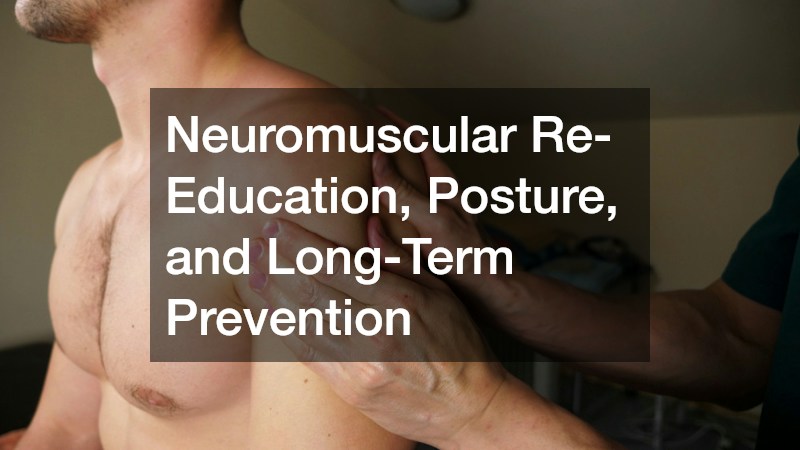
Restoring mechanical mobility and muscle strength is only part of the non-surgical recovery process; training the nervous system to coordinate these movements correctly is equally critical. Slouched posture, rounded shoulders, and repetitive overhead tasks frequently disrupt normal muscle activation patterns over time. Neuromuscular re-education focuses on retraining the brain and muscles to work together efficiently during complex everyday tasks, such as lifting objects, reaching into cabinets, or performing athletic activities. Proper ergonomic alignment reduces unnecessary strain on the upper trapezius and levator scapulae muscles.
Therapists work closely with patients to correct posture, optimize workstation ergonomics, and modify movement habits that contribute to micro-trauma. Dedicated shoulder pain therapy equips individuals with custom home exercise programs, posture checks, and self-care strategies that safeguard the joint against future reinjury. Patients learn to recognize early warning signs of fatigue before micro-tears can develop. Establishing these healthy movement habits creates a resilient physical foundation that supports lifelong joint health. By addressing underlying movement dysfunctions, physical therapy offers a comprehensive, non-invasive framework that restores pain-free motion, rebuilds physical strength, and returns patients to an active lifestyle.